
Dubai’s real estate market has been one of the fastest-growing property markets in the world since 2021. Property prices in areas like Dubai Marina, Downtown Dubai and Palm Jumeirah have surged as international investors poured money into the emirate’s tax-friendly property sector.
However, as the market enters 2026, investors are increasingly asking an important question: Will Dubai real estate crash in 2026?
With rising supply, geopolitical tensions in the Middle East and global economic uncertainty, analysts are closely watching the Dubai property market. While risks exist, most experts believe a major crash is unlikely, although some segments may experience slower growth or mild price corrections.
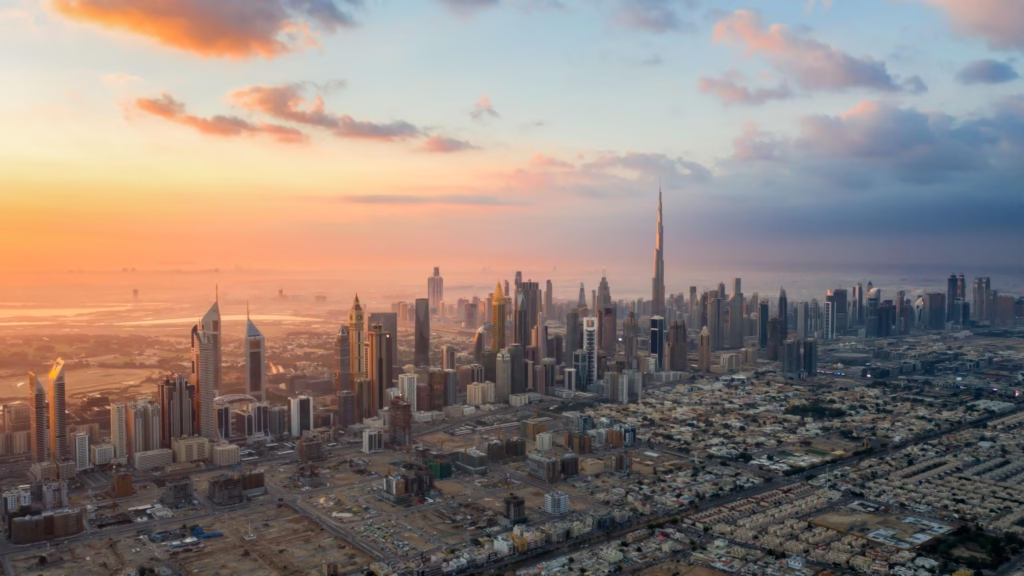
Dubai Property Market Performance
Dubai’s real estate sector has seen strong growth over the past few years.
Key trends include:
- Luxury property demand increased significantly between 2022 and 2025
- Global investors moved capital to Dubai due to tax advantages
- Rental demand rose because of population growth and expatriate migration
Prime residential areas such as Dubai Marina, Palm Jumeirah and Downtown Dubai have seen some of the highest property price appreciation in the city.
This strong performance has made Dubai one of the most attractive real estate investment destinations globally.
Oversupply Concerns in Dubai Housing Market
One of the biggest risks facing the Dubai property market in 2026 is the large number of new homes expected to enter the market.
Thousands of residential units are currently under construction and scheduled for completion over the next few years.
When supply increases faster than demand, property prices may stabilize or decline in certain areas. Mid-market apartment projects and speculative developments are generally the most vulnerable to oversupply pressures.
However, Dubai has historically absorbed new supply due to strong population growth and international migration.
Impact of Geopolitical Tensions
Regional geopolitical tensions can also influence investor sentiment in the Dubai real estate market.
During periods of uncertainty, investors often delay major purchases such as property investments. This can lead to short-term slowdowns in transaction volumes.
However, Dubai has historically benefited from regional instability as wealthy investors often move capital to the UAE because of its political stability, strong infrastructure and global connectivity.
As a result, geopolitical risks may create temporary market hesitation rather than long-term property declines.
Which Dubai Areas Are Most Vulnerable?
If a property market correction occurs, it is unlikely to affect all locations equally.
Higher risk areas may include:
- Oversupplied apartment communities
- Speculative off-plan developments
- Mid-market investor housing projects
Meanwhile, prime locations tend to remain resilient even during market downturns.
Stable locations include:
- Palm Jumeirah
- Downtown Dubai
- Dubai Hills Estate
- Waterfront luxury developments
These areas continue to attract high-net-worth investors and international buyers.
Dubai Real Estate Market Forecast for 2026
Most analysts expect the Dubai property market to shift from rapid growth to a more balanced phase.
Possible market scenarios include:
Best-case scenario
- Continued demand from international investors
- Price growth of around 5–8%
Base scenario
- Market stabilization after strong growth years
Downside scenario
- Mild correction of 10–15% in oversupplied segments
A severe market crash similar to the global financial crisis of 2008 is considered unlikely unless a major global economic downturn occurs.
Is Dubai Property Still a Good Investment?
Despite market uncertainties, Dubai continues to offer several advantages for global real estate investors:
- Tax-free property ownership
- High rental yields compared with global cities
- Long-term residency options such as the Golden Visa
- Strong global demand for luxury real estate
For investors seeking international diversification, Dubai remains a competitive property market with strong long-term potential.
Conclusion
While concerns about oversupply and geopolitical tensions have raised questions about the future of Dubai’s property market, most forecasts suggest that a major real estate crash in 2026 is unlikely.
Instead, the market is expected to transition from a period of rapid price growth to a more stable phase with moderate price movements.
Investors should focus on prime locations, strong developers and long-term fundamentals when considering property investments in Dubai.
FAQs
Will Dubai property prices fall in 2026?
Some mid-market areas may see price corrections due to supply increases, but a citywide crash is unlikely.
Is Dubai real estate a bubble?
While prices have risen rapidly in recent years, strong demand from international investors supports the market.
Is Dubai property a good investment for Indians?
Dubai offers tax advantages, strong rental yields and residency benefits, making it attractive for many Indian investors.