
🏢 Introduction
Water leakage disputes are among the most common conflicts in Mumbai Cooperative Housing Societies (CHS), especially in older buildings in Dadar, Bandra, Andheri, Kandivali, Thane and Ghatkopar.
Typical complaints include:
- Ceiling leakage from upper flat
- Bathroom seepage
- Terrace waterproofing failure
- Pipeline burst
- Drainage blockage
The key question always is:
👉 Who is legally responsible — the flat owner or the society?
The answer depends on whether the leakage originates from:
- Internal plumbing
- External/common pipeline
- Structural slab
- Terrace/common area
Let’s break this down clearly.
1️⃣ Internal vs External Plumbing – The Core Rule
The most important distinction:
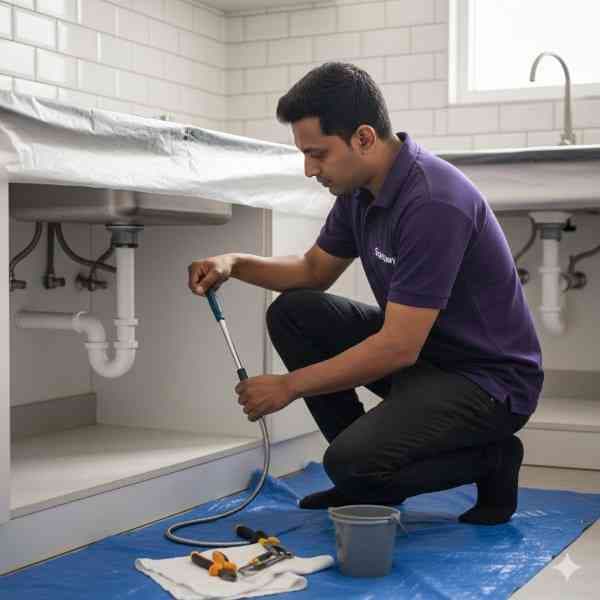
A) Internal Plumbing (Owner’s Responsibility)
Includes:
- Bathroom pipes inside flat
- Kitchen sink pipeline
- Internal drainage
- Washing machine outlet
- Internal fittings
If leakage originates from inside the flat → flat owner is responsible.
B) External/Common Plumbing (Society’s Responsibility)
Includes:
- Main vertical drainage stack
- Common water pipeline
- External wall seepage
- Structural slab
- Terrace waterproofing
- Common tank overflow
If leakage is due to common infrastructure → society is responsible.
2️⃣ Bathroom Leakage from Upper Flat
Most common Mumbai dispute.
If:
- Upper flat bathroom floor not waterproofed properly
- Tile joints cracked
- Improper plumbing installation
Then:
Upper flat owner must repair.
Society may intervene if dispute escalates, but liability usually lies with flat owner.
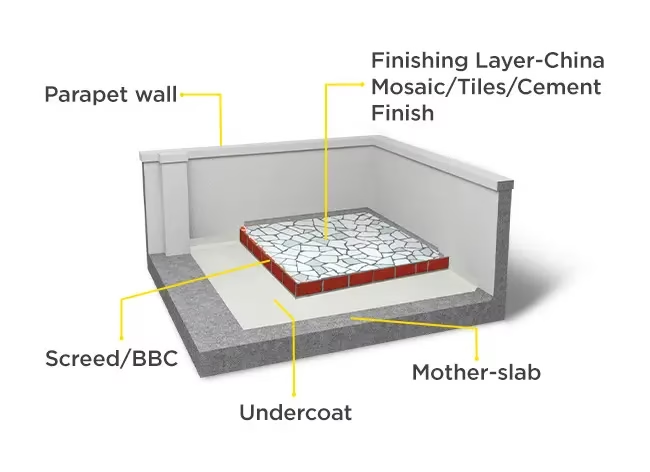
3️⃣ Terrace Leakage – Who Pays?
Terrace is generally:
👉 Common area
If leakage originates from:
- Terrace slab
- Waterproofing failure
- Common terrace cracks
Then society is responsible.
However:
If terrace is exclusive terrace attached to specific flat, responsibility may vary depending on society rules.
4️⃣ Structural Slab Leakage
If slab between two flats is damaged:
- Structural slab is common property.
- Society must carry out structural repair.
But:
If damage caused due to internal alteration by owner, owner may share liability.
5️⃣ Can Society Force Owner to Repair Leakage?
Yes — if leakage originates from internal plumbing.
Society may:
✔ Issue notice
✔ Seek technical inspection
✔ Demand repair within timeline
If owner refuses, society may:
- Escalate legally
- Seek order through Cooperative Court
6️⃣ What If Owner Refuses to Allow Inspection?
In some disputes:
Upper flat owner refuses entry for inspection.
Society can:
- Issue written notice
- Record complaint
- Approach Registrar if needed
Persistent refusal may invite legal consequences.
7️⃣ Terrace Water Tank Leakage
If leakage from:
- Common overhead tank
- Common water storage
Society must repair.
Tank maintenance is society responsibility.
8️⃣ Old Building Seepage in Mumbai
In 30–50 year old buildings:
- Concrete deterioration common
- Waterproofing layers fail
- Corrosion of steel reinforcement
Such repairs usually fall under:
✔ Society structural repair fund
✔ Sinking fund
Society cannot push structural repair cost solely to individual member.
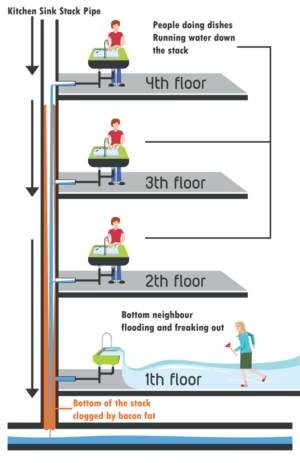
9️⃣ Plumbing Shaft & Common Drainage
Drainage shaft running vertically is:
👉 Common area
If blockage in common shaft:
Society responsible.
If blockage inside flat branch line:
Flat owner responsible.
Technical inspection determines liability.
🔟 Insurance & Leakage
Some societies have:
- Building insurance policies
Insurance may cover:
- Structural damage
- Fire-related water damage
Usually does not cover internal plumbing negligence.
1️⃣1️⃣ Renovation-Induced Leakage
If leakage caused by:
- Shifting bathroom
- Removing waterproof layer
- Poor contractor work
Then:
Owner who renovated is liable.
Society may demand structural engineer certificate in such cases.
1️⃣2️⃣ Can Society Deduct Repair Cost from Owner?
If clearly proven internal leakage:
Society may:
✔ Recover repair cost
✔ Adjust against maintenance (after due process)
However, arbitrary deduction without proof may be challenged.
1️⃣3️⃣ Legal Remedies for Leakage Disputes
If dispute unresolved:
- Send written complaint to committee.
- Request joint inspection report.
- Get independent plumber/engineer report.
- Approach Assistant Registrar.
- File dispute in Cooperative Court (if necessary).
Documentation is critical.
📊 Responsibility Summary Table
| Leakage Type | Responsible Party |
|---|---|
| Internal bathroom pipe | Flat owner |
| Kitchen sink leakage | Flat owner |
| Vertical drainage stack | Society |
| Terrace waterproofing | Society |
| Structural slab crack | Society |
| Renovation damage | Owner who renovated |
| Common water tank | Society |
📊 Quick Visual Guide (Infographic Summary)
4
Key Takeaways:
- Internal plumbing → Owner
- Structural/common area → Society
- Terrace usually common property
- Written inspection is essential
- Legal escalation possible if dispute continues
❓ Frequently Asked Questions
Who pays for bathroom leakage in Mumbai CHS?
Usually the upper flat owner if leakage is from internal plumbing.
Is terrace leakage society responsibility?
Yes, if terrace is common area.
Can society refuse to repair structural crack?
No, structural slab is common property.
Can owner refuse inspection?
No. Society can take action if access denied.
What if both parties deny responsibility?
Technical inspection report required to determine liability.
🏁 Conclusion
Water leakage disputes in Mumbai housing societies often arise due to confusion about internal vs common area responsibility.
General rule:
- Internal plumbing → Owner
- Structural/common infrastructure → Society
Proper inspection, documentation and written communication are essential before escalating disputes.
Understanding CHS plumbing responsibility helps prevent unnecessary legal conflict and protects both members and the society.
Disclaimer: This is not legal advice. Kindly consult a qualified lawyer or legal professional for advice specific to your situation.