
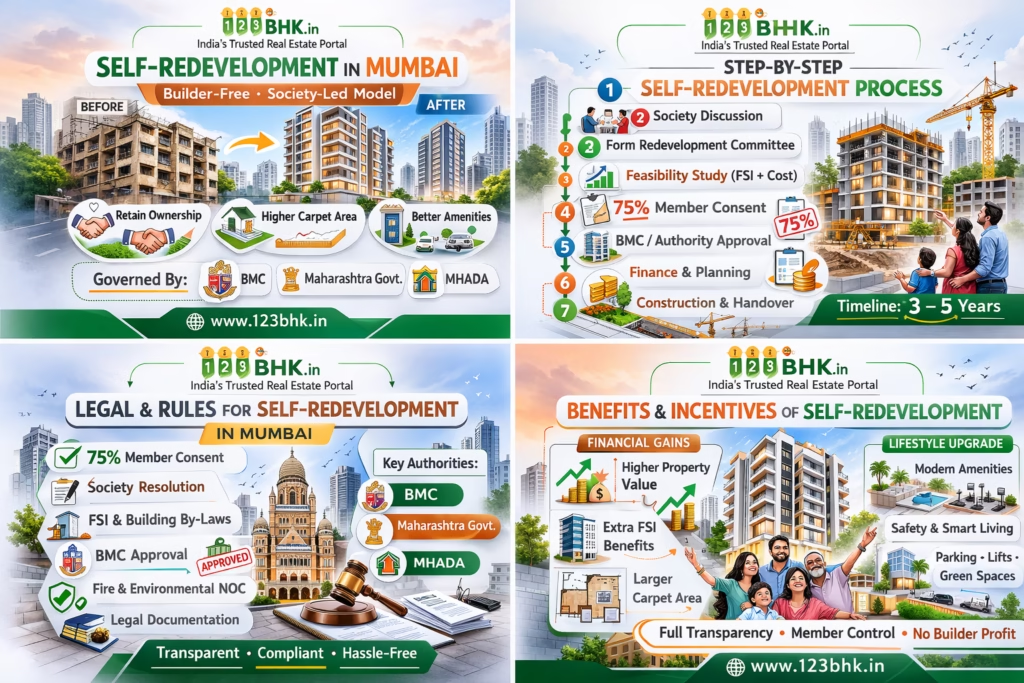
Self-redevelopment has emerged as a powerful way for housing societies in Mumbai to transform aging buildings into modern, safe and spacious homes — without losing control to external builders. In simple terms, self-redevelopment is a process where a housing society collectively redevelops its property with its own members instead of selling to a builder.
📌 What Does Self-Redevelopment Mean?
In the context of Mumbai, self-redevelopment refers to redevelopment led by the society — through a committee, developer partners, or consultants — where the benefits of redevelopment directly go to existing members. This model ensures ownership retention, better financial transparency and increased living space for residents.
Often, people ask: Is self-redevelopment the same everywhere? Legally it is shaped by state policies — in Mumbai, self-redevelopment follows Maharashtra government housing rules and MHADA norms (MHADA = Maharashtra Housing & Area Development Authority), which guide approvals, incentives, and procedural compliance.Self-Redevelopment Process & Steps in Mumbai
Redeveloping a society is exciting, but it’s also one of the most complex projects a residential group can undertake. Here’s a step-by-step breakdown of how self-redevelopment typically unfolds in Mumbai:
✅ 1. Preliminary Discussions
Society members begin by understanding whether self-redevelopment is suitable for their building. This includes assessing:
- Age, condition and structure of the building
- Market rental value
- Member expectations
✅ 2. Forming a Redevelopment Committee
A self-redevelopment committee is elected from society members to lead the process. This group is responsible for:
- Hiring consultants (architects, lawyers, valuers)
- Communicating with members
- Guiding decisions
✅ 3. Feasibility Study
Experts conduct a feasibility study to determine:
- Buildable area after redevelopment
- Likely FSI (Floor Space Index)
- Estimated costs
✅ 4. Drafting a Redevelopment Proposal
The committee works with:
- Architects
- Structural engineers
- Legal advisors
to prepare a redevelopment plan outlining: - Number of new flats
- Allocation of spaces
- Estimated timelines and budgets
✅ 5. Member Consent
Mumbai self-redevelopment rules require a 75% consent from members for redevelopment to proceed.
✅ 6. Approvals from Authorities
The proposed plan is submitted to:
- BMC (Brihanmumbai Municipal Corporation)
- MHADA (if applicable)
Approvals ensure compliance with building bylaws and urban development regulations.
✅ 7. Implementation & Construction
Once approvals are in place and finance is arranged, construction starts under the committee’s supervision.