
Mumbai is India’s financial capital and one of the most dynamic real estate markets in Asia. From luxury sea-facing apartments in South Mumbai to redevelopment-driven growth in the suburbs, Mumbai offers a wide spectrum of investment opportunities.
Despite high entry costs, Mumbai real estate continues to attract investors due to liquidity, rental demand, redevelopment potential, and infrastructure-led growth.
In this complete 2026 guide, we cover:
- Current property prices
- Best areas to invest
- Rental yield trends
- Infrastructure catalysts
- Redevelopment opportunities
- 5-year outlook
- Risks and strategy
📍 Why Mumbai Real Estate Remains Unique
Mumbai is unlike any other Indian city because:
- It is India’s financial capital
- Land supply is extremely limited
- Redevelopment dominates new supply
- Rental demand remains strong
- Infrastructure upgrades drive micro-market growth
Unlike Tier-2 cities, Mumbai real estate is driven by:
- Corporate employment
- High net-worth individuals
- Redevelopment projects
- Commercial activity
- Long-term wealth preservation
💰 Mumbai Property Prices (2026 Overview)
Mumbai remains one of India’s most expensive property markets.
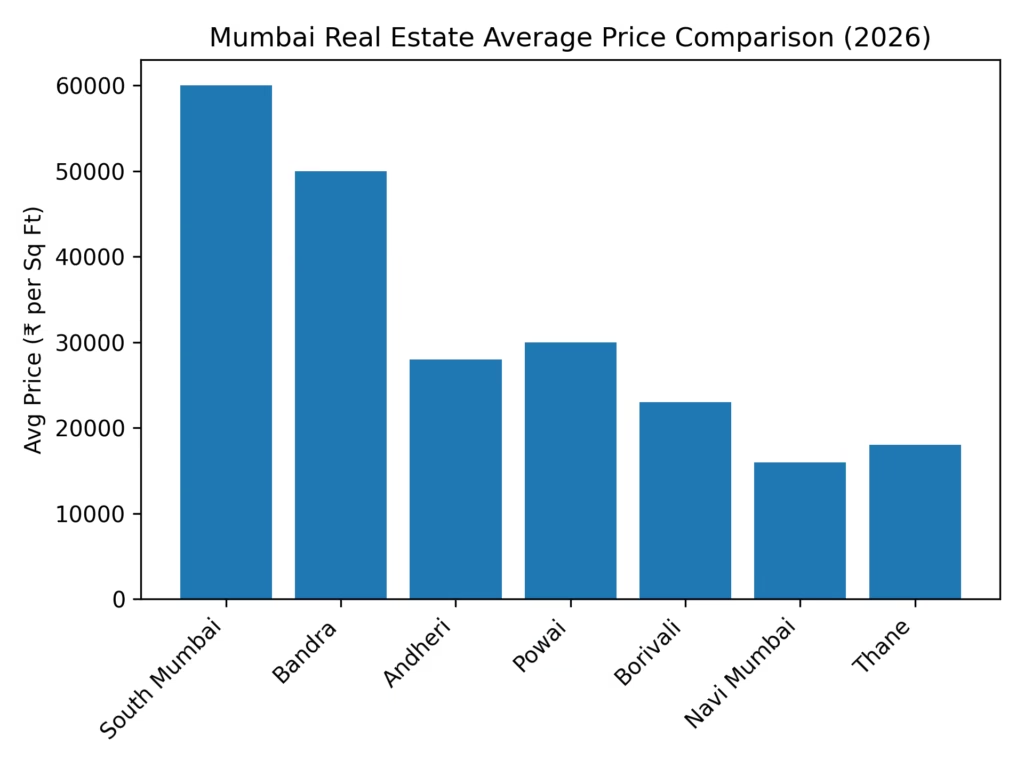
Approximate Price Per Sq Ft (Indicative 2026)
| Location | Avg Price Per Sq Ft |
|---|---|
| South Mumbai | ₹40,000 – ₹75,000 |
| Bandra | ₹35,000 – ₹60,000 |
| Andheri | ₹22,000 – ₹35,000 |
| Powai | ₹25,000 – ₹35,000 |
| Borivali | ₹18,000 – ₹28,000 |
| Thane (Extended MMR) | ₹12,000 – ₹22,000 |
| Navi Mumbai | ₹10,000 – ₹20,000 |
Prices vary significantly based on:
- Developer reputation
- View (sea-facing commands premium)
- Redevelopment vs new land
- Infrastructure proximity
🏗 The Redevelopment Story – Mumbai’s Biggest Driver
Mumbai has limited vacant land. As a result, redevelopment has become the city’s dominant housing supply model.
Old buildings are being replaced with:
- Taller towers
- Premium amenities
- Modern layouts
- Improved building standards
Redevelopment creates:
✔ Value unlock for existing owners
✔ New inventory for buyers
✔ Micro-market price upgrades
Suburbs such as Borivali, Kandivali, Andheri, and Dadar are witnessing significant redevelopment activity.
🚆 Infrastructure – The Real Growth Engine
Mumbai’s next growth cycle is infrastructure-driven.
Key projects influencing property values include:
- Metro line expansion
- Coastal Road development
- Trans Harbour Link
- Suburban rail upgrades
- Airport connectivity improvements
Micro-markets near new metro stations often see price appreciation ahead of completion.
🏘 Best Areas to Invest in Mumbai (2026)
🥇 Bandra – Premium Lifestyle & Liquidity
- Strong resale demand
- High rental absorption
- Premium branding
Ideal for:
Luxury buyers & capital preservation.
🥈 Andheri – Corporate & Rental Hub
- Proximity to business districts
- Strong rental demand
- Redevelopment activity
Best for:
Rental investors & mid-premium buyers.
🥉 Borivali – Redevelopment-Led Growth
- Strong end-user demand
- Metro connectivity improvements
- Mid-income buyer base
Best for:
Balanced risk-return investors.
Powai – IT & Premium Mid-Segment
- Gated communities
- Corporate professionals
- Stable rental demand
Best for:
Long-term mid-premium investors.
Navi Mumbai – Affordable Growth Corridor
- Planned infrastructure
- Airport-driven expansion
- Lower entry pricing
Best for:
Growth-focused investors.
📈 Rental Market Analysis
Mumbai offers steady rental demand due to:
- Corporate workforce
- Financial institutions
- Media & entertainment industry
- Start-up ecosystem
Rental Yield (Gross)
2% – 4% depending on locality.
Central zones offer lower yields but higher capital stability. Suburbs may offer slightly better rental returns.
📊 Mumbai vs Other Indian Cities
| Factor | Mumbai | Bangalore | Hyderabad |
|---|---|---|---|
| Entry Price | Very High | High | Moderate |
| Rental Yield | Moderate | Moderate | Moderate |
| Appreciation | Moderate | High | High |
| Liquidity | Very High | High | High |
| Risk | Low-Moderate | Moderate | Moderate |
Mumbai leads in liquidity and wealth preservation.
🧠 Who Should Invest in Mumbai?
✔ High Net-Worth Individuals
Seeking capital stability.
✔ NRIs
Looking for safe Indian real estate exposure.
✔ Long-Term Investors
Planning 7–10 year holding.
✔ Redevelopment Beneficiaries
Unlocking hidden value in old buildings.
Mumbai is not ideal for speculative short-term flips due to high stamp duty and transaction costs.
⚖ Pros & Cons of Mumbai Real Estate
✅ Pros
- Strong liquidity
- Land scarcity
- Infrastructure upgrades
- Global city status
- High resale strength
⚠ Cons
- Very high entry cost
- Lower rental yield compared to price
- Regulatory complexity
- Slower appreciation vs emerging IT cities
🔮 5-Year Outlook (2026–2031)
Expected trends:
- Metro-driven micro-market growth
- Continued redevelopment expansion
- Moderate steady appreciation
- Premium pricing consolidation
Mumbai is unlikely to see explosive growth, but it remains one of India’s most secure property markets.
💡 Investment Strategy Framework
Strategy 1: Redevelopment Play
Buy into older buildings in strong suburban pockets.
Strategy 2: Rental Stability Strategy
Invest near business hubs.
Strategy 3: Capital Preservation
Target Bandra, South Mumbai, or prime Andheri.
Strategy 4: Growth Corridor
Explore Navi Mumbai and extended MMR.
🏁 Final Verdict
Mumbai real estate in 2026 is:
- Expensive
- Liquid
- Infrastructure-driven
- Redevelopment-focused
- Long-term wealth-oriented
It is not a speculative growth market like some Tier-1 IT cities.
It is a stability and capital preservation market with moderate upside.
For investors who can afford the entry barrier and are willing to hold long term, Mumbai remains one of India’s most resilient real estate markets.