
Introduction
In every Cooperative Housing Society (CHS) in Maharashtra — whether in Mumbai, Thane, Pune or Navi Mumbai — the Managing Committee is the governing body responsible for administration, financial management and compliance.
These powers are defined under Model Bye Laws 113–152 framed under the Maharashtra Cooperative Societies Act.
However, many disputes arise because:
- Committee exceeds its authority
- Members don’t understand their rights
- Elections are improperly conducted
- Financial decisions lack transparency
This guide explains the exact legal powers and limitations of the CHS Managing Committee.
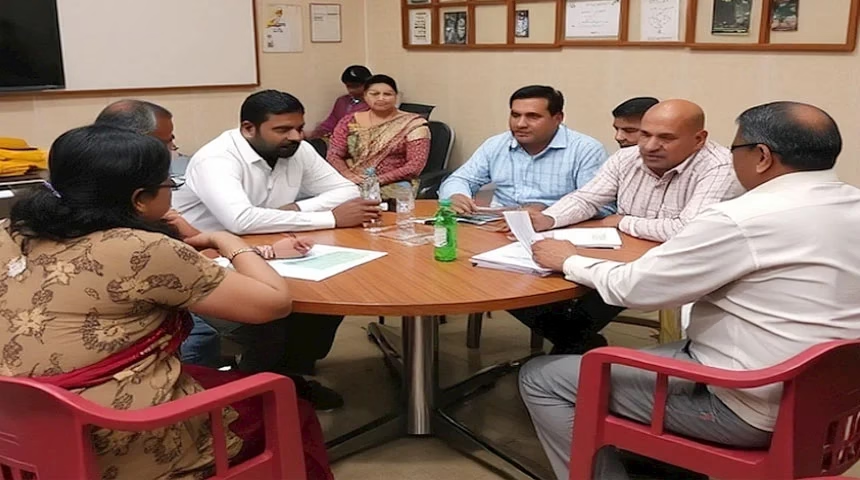
1️⃣ What is a CHS Managing Committee?
The Managing Committee is an elected body of members responsible for:
- Day-to-day administration
- Financial management
- Maintenance supervision
- Legal compliance
- Representing society in disputes
- Overseeing redevelopment
It functions as the executive authority of the society.
2️⃣ Composition of Managing Committee
As per bye laws:
- Minimum 11 members (varies based on society size)
- Includes:
- Chairman
- Secretary
- Treasurer
- Committee Members
Reservation rules apply for:
- Women members
- SC/ST
- OBC
- Nomadic Tribes (as applicable)
Tenure: 5 years
3️⃣ Powers of the Managing Committee
The committee has authority to:
✔ Collect Maintenance Charges
- Levy maintenance as per approved budget
- Charge interest on delayed payments
✔ Maintain Society Property
- Repairs
- Lift maintenance
- Security contracts
- Housekeeping contracts
✔ Represent Society Legally
- File complaints
- Defend lawsuits
- Issue notices
✔ Issue Share Certificates
- Approve transfer of flats
- Record nominations
✔ Convene General Body Meetings
4️⃣ Powers the Committee DOES NOT Have
Very important for members.
Committee cannot:
❌ Increase transfer charges beyond legal limit
❌ Impose arbitrary fines
❌ Cancel membership without due process
❌ Sell common areas
❌ Take redevelopment decision without General Body approval
❌ Deny access to society records
Major decisions require General Body approval.
5️⃣ Role of Chairman in CHS
The Chairman:
- Presides over meetings
- Maintains discipline during discussions
- Signs official documents
- Represents society publicly
Chairman does NOT have unilateral financial authority.
All decisions must be recorded in meeting minutes.
6️⃣ Role of Secretary in CHS
The Secretary is the operational head.
Duties include:
- Maintaining records
- Issuing notices
- Keeping minutes of meetings
- Maintaining membership register
- Filing statutory returns
- Coordinating with Registrar
Secretary often becomes most powerful office bearer — but must act within bye laws.
7️⃣ Role of Treasurer
Treasurer manages:
- Society accounts
- Bank transactions
- Budget preparation
- Audit coordination
- Expense records
Funds must be used only for society purposes.
Misuse can lead to criminal liability.
8️⃣ Committee Meetings – Legal Requirements
- Must meet at least once every month
- Quorum required (minimum members present)
- Minutes must be recorded within 30 days
- Members can inspect minutes
Decisions without quorum are invalid.
9️⃣ Annual General Meeting (AGM)
AGM must be conducted before:
30th September each year
Agenda includes:
- Approval of accounts
- Audit report
- Budget approval
- Appointment of auditor
- Election (if applicable)
Failure to conduct AGM can attract action from Registrar.
🔟 Election of Managing Committee
Elections are conducted under State Cooperative Election Authority.
Important rules:
- Only active members can vote
- Defaulters cannot contest
- Nomination process required
- Secret ballot system
Election disputes go to Cooperative Court.
1️⃣1️⃣ Financial Authority Limits
Committee must:
- Prepare annual budget
- Maintain reserve fund
- Maintain sinking fund
- Get audit conducted annually
Major capital expenditure requires General Body approval.
1️⃣2️⃣ Record Keeping Obligations
Committee must maintain:
- Member register
- Share register
- Minutes book
- Cash book
- Asset register
- Nomination register
Members can demand inspection.
Refusal can be challenged legally.
1️⃣3️⃣ Can Committee Be Removed?
Yes.
Ways to remove:
- No-confidence motion
- Registrar intervention
- Court order
- Disqualification for misconduct
Members can call Special General Meeting with required signatures.
1️⃣4️⃣ Committee During Redevelopment
In Mumbai especially:
Committee must:
- Appoint Project Management Consultant (PMC)
- Obtain 75% member consent
- Conduct transparent bidding
- Avoid conflict of interest
If committee acts against members’ interest, redevelopment can be legally challenged.
1️⃣5️⃣ Common Committee Misuse Cases
In Maharashtra societies, common complaints include:
- Excess maintenance
- Illegal parking allocation
- Favoritism in redevelopment
- Non-transparent contracts
- Delayed transfer approvals
Members should document everything before filing complaint.
📊 Quick Summary Table
| Position | Key Responsibility |
|---|---|
| Chairman | Preside meetings |
| Secretary | Administration & compliance |
| Treasurer | Finance management |
| Committee | Collective decision-making |
| Tenure | 5 years |
| AGM Deadline | 30 September |
❓ Frequently Asked Questions
Can the chairman take decisions alone?
No. All decisions must be approved in committee meeting.
Can society deny inspection of records?
No. Members have right to inspect.
Can committee increase maintenance anytime?
Only as per approved budget and bye laws.
Can a defaulter contest election?
No.
What if committee does not conduct AGM?
Complaint can be filed with Registrar.
🏁 Conclusion
The Managing Committee plays a crucial role in maintaining discipline, financial stability and legal compliance in a Cooperative Housing Society.
However, its powers are not absolute.
Understanding Bye Laws 113–152 helps members:
- Prevent misuse of authority
- Ensure transparent governance
- Participate actively in decisions
- Protect redevelopment rights
In Maharashtra — especially Mumbai — awareness of committee powers can prevent years of litigation and financial loss.
Disclaimer: This is not legal advice. Kindly consult a qualified lawyer or legal professional for advice specific to your situation.