
For two decades, property development powered China’s growth story. Urbanization, easy credit, and speculative buying created an unprecedented construction boom.
Major developers like:
- China Evergrande Group
- Country Garden
- Sunac China
expanded aggressively through high leverage, offshore dollar bonds, and pre-sale financing models.
The system worked — until it didn’t.
🚨 What Triggered the China Property Crash?
1️⃣ The “Three Red Lines” Policy (2020)
In 2020, Beijing introduced debt-control measures limiting borrowing for developers who crossed leverage thresholds.
This instantly squeezed liquidity for highly indebted builders.
2️⃣ Evergrande’s $300 Billion Crisis
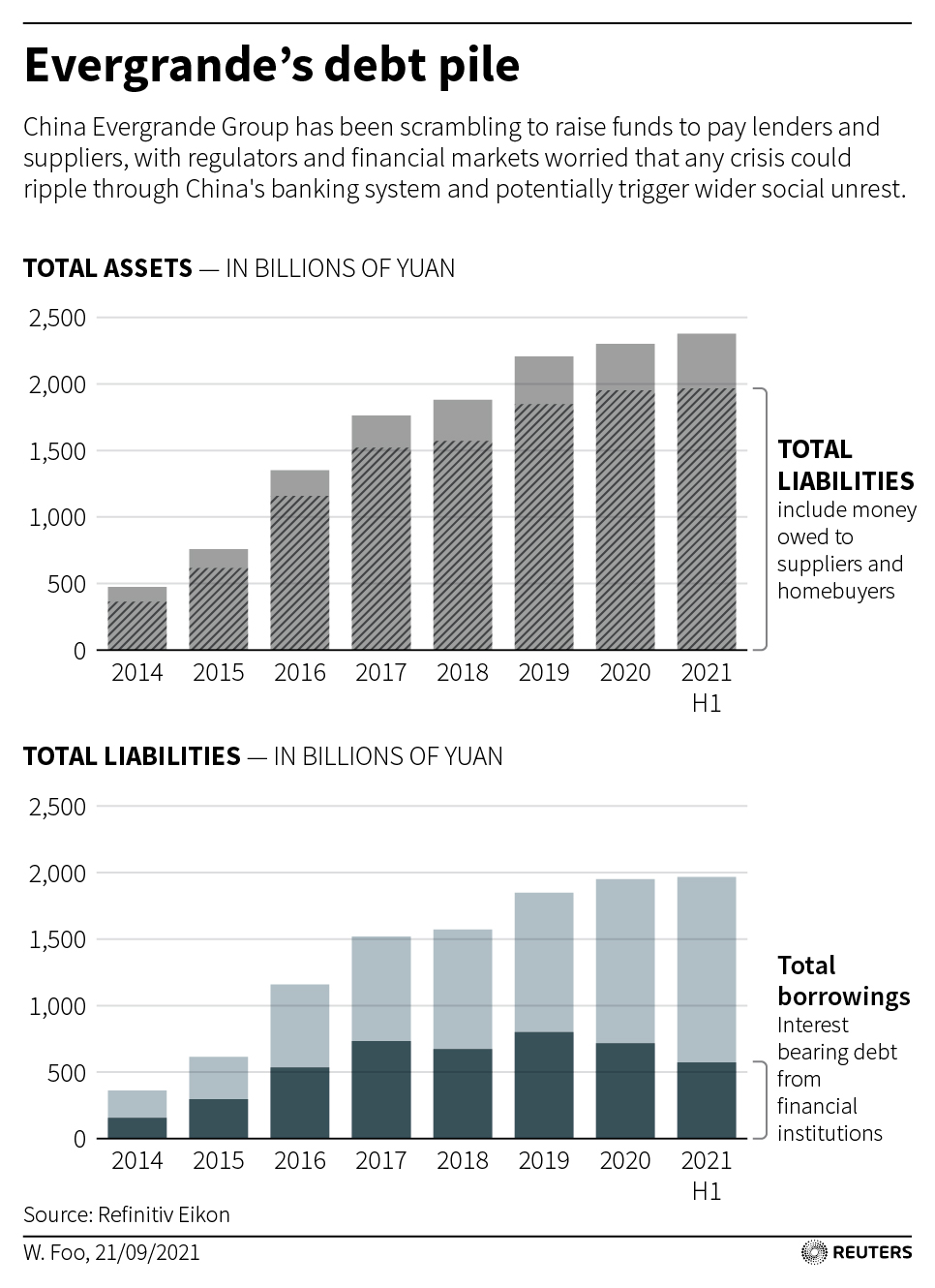
In 2021, China Evergrande Group defaulted on massive liabilities exceeding $300 billion — becoming one of the largest corporate debt crises in history.
Investor confidence collapsed.
3️⃣ Mortgage Boycotts
Homebuyers stopped paying mortgages on unfinished projects, exposing the weakness of China’s pre-sale model.
4️⃣ Demographic Decline
China’s population began shrinking, reducing long-term housing demand — a structural headwind rarely discussed during the boom.
📊 Economic Impact on China
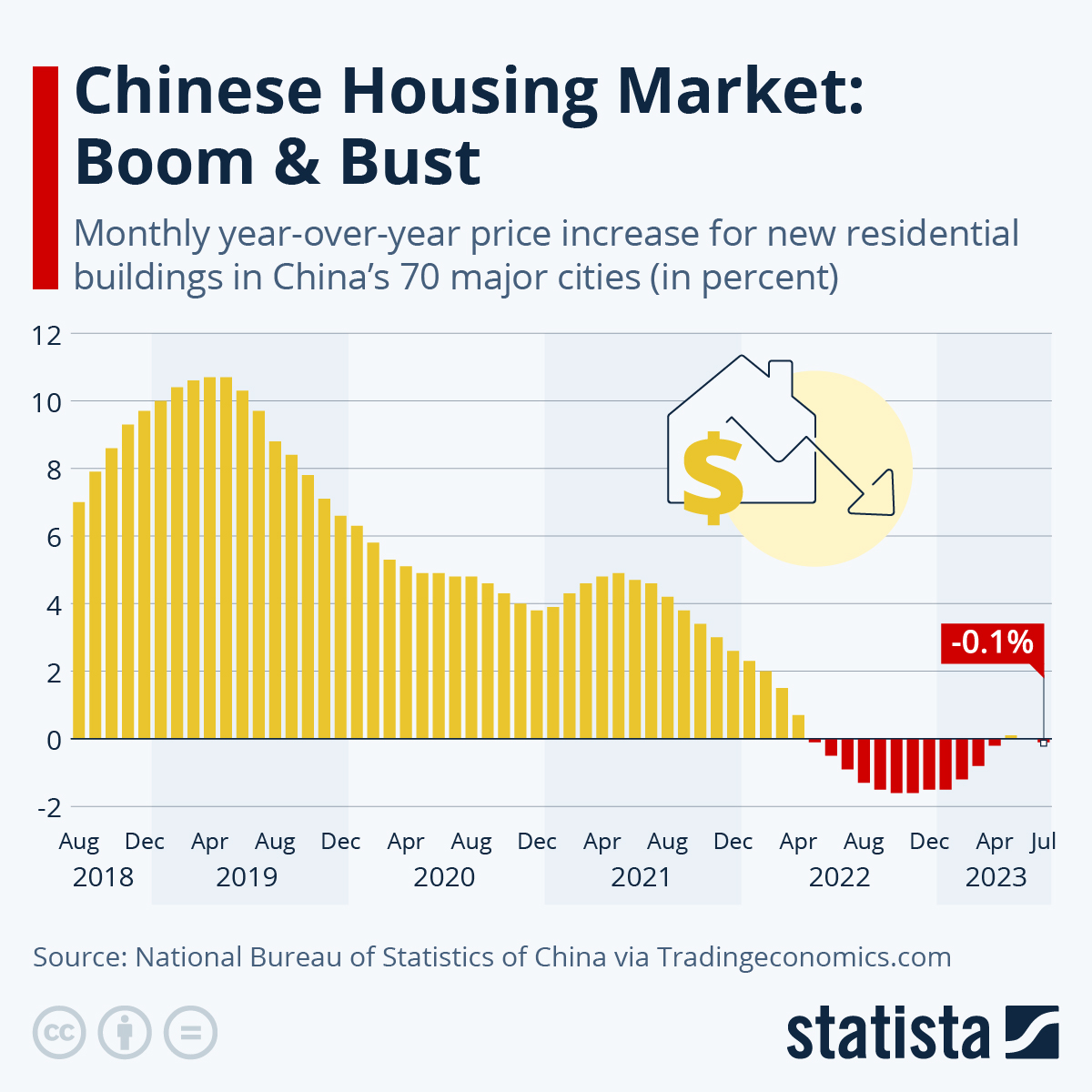
- Property prices declined across major cities
- Construction starts plunged
- Local government revenues from land sales collapsed
- Youth unemployment surged
- Bank balance sheets weakened
China’s GDP growth has slowed significantly compared to pre-pandemic averages.
Unlike the 2008 collapse of Lehman Brothers, China’s crisis remains largely contained domestically due to capital controls and state-dominated banking.
However, containment does not mean immunity.
🌍 Global Impact of China’s Real Estate Bust
China consumes massive amounts of:
- Iron ore
- Steel
- Copper
- Cement
The slowdown has hit commodity-exporting nations like Australia and Brazil.
Global implications include:
- Reduced global growth momentum
- Lower commodity prices
- Weak Asian market sentiment
- Pressure on emerging markets
📉 Is This a Bubble Burst or Structural Reset?
Many analysts now believe this is not a cyclical downturn but a structural deleveraging phase.
China is attempting to transition from:
🏗 Property-led growth
➡ Manufacturing, technology & domestic consumption
But such transitions take years — even decades.
Japan’s 1990 property collapse remains a historical parallel.
📊 Investor Risk Analysis
⚠ Key Risks
- Continued developer defaults
- Weak consumer confidence
- Banking sector stress
- Prolonged deflation
✅ Potential Opportunities
- Distressed asset acquisitions
- State-backed developer consolidation
- Selective equity recovery plays
- Commodity price stabilization cycles
Investors must differentiate between short-term volatility and long-term structural repositioning.
📌 Lessons for Indian & Global Investors
India’s property sector is structurally different:
- Lower household leverage
- Stronger end-user demand
- Regulatory oversight under RERA
- Demographic growth tailwinds
However, lessons include:
✔ Avoid excessive developer leverage
✔ Monitor pre-sale funding risks
✔ Watch speculative oversupply
✔ Diversify geographically
📈 Infographic: China Real Estate Crisis Snapshot (2026)

4
📌 Timeline Overview
2015–2019 → Peak property expansion
2020 → Three Red Lines policy introduced
2021 → Evergrande defaults
2022 → Mortgage boycotts spread
2023–2025 → Continued developer distress
2026 → Structural adjustment phase
🔮 China Property Market Forecast 2026–2030
Most economists expect:
- Stabilization rather than rapid recovery
- Gradual price correction
- Government-supported project completions
- Slower but more sustainable growth model
A sharp rebound appears unlikely without major fiscal stimulus.
🏁 Final Takeaway
China’s real estate bust is not merely a housing correction — it marks the end of an era of debt-driven expansion.
The long-term story now hinges on whether China can reinvent its growth engine beyond property.
For global investors, the message is clear:
Real estate bubbles built on leverage eventually correct — even in the world’s second-largest economy.