
Chembur Real Estate Market 2026 – From Industrial Past to Infrastructure-Led Growth Hub
Chembur has undergone one of the most dramatic transformations in Mumbai’s suburban landscape.
Once associated with industrial activity and connectivity bottlenecks, Chembur is now:
- An infrastructure-connected corridor
- A redevelopment hotspot
- A mid-to-premium residential hub
- A strategic East-Mumbai connector
In 2026, Chembur stands as one of Mumbai’s most compelling balanced investment micro-markets — offering better entry pricing than Bandra or Lower Parel, while benefiting from major infrastructure upgrades.
This guide covers:
- Property prices
- Infrastructure transformation
- Rental ecosystem
- Redevelopment impact
- Appreciation outlook
- Risk profile
- Investment strategy
📍 Why Chembur Is Strategically Positioned
Chembur’s biggest advantage is connectivity.
It connects:
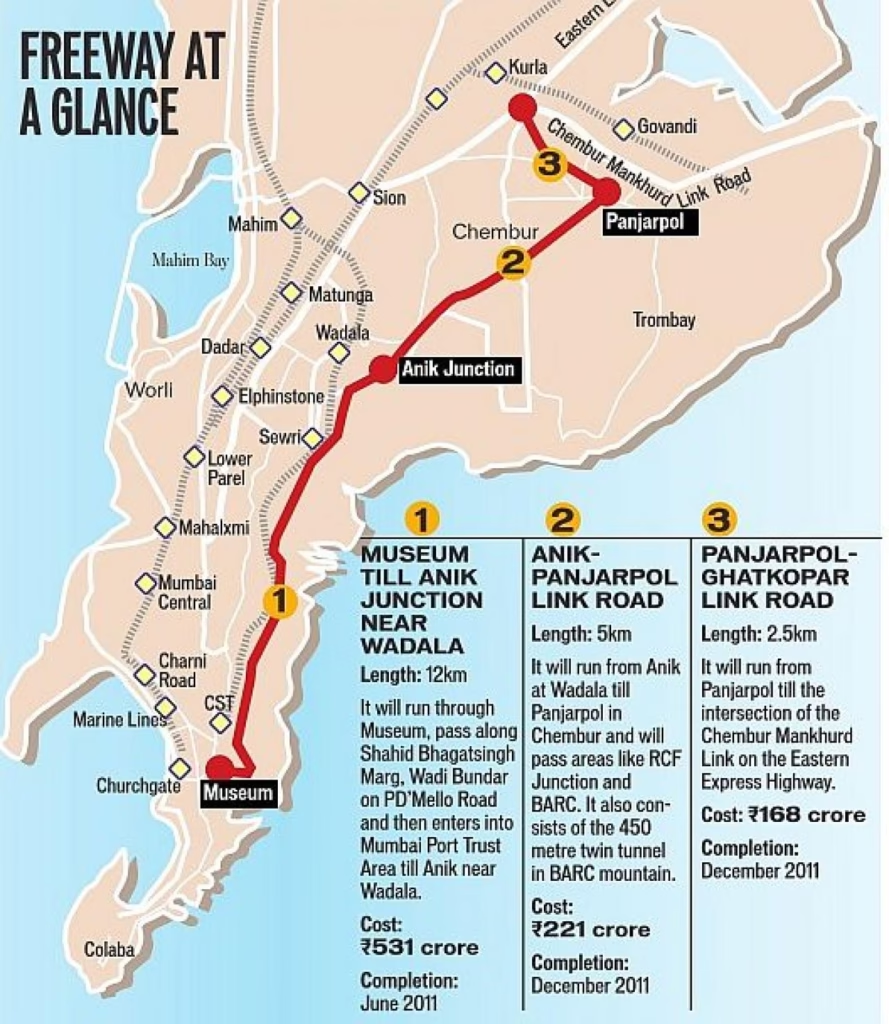
- South Mumbai via Eastern Freeway
- BKC via SCLR
- Navi Mumbai via Vashi Bridge
- Thane via Eastern Express Highway
- Central Mumbai business districts
Few suburbs provide this multi-directional connectivity advantage.
This has changed Chembur’s pricing narrative over the past decade.
🚆 Infrastructure – The Game Changer
Chembur’s growth story is primarily infrastructure-led.
Key developments include:
- Eastern Freeway
- Santacruz-Chembur Link Road (SCLR)
- Metro line expansion
- Monorail connectivity
- Improved arterial road networks
These projects reduced commute times dramatically — particularly to South Mumbai and BKC.
Connectivity is Chembur’s biggest investment thesis.
💰 Chembur Property Prices (2026 Update)
Average Price Per Sq Ft
₹18,000 – ₹28,000
Premium developments may reach ₹30,000+ depending on location and amenities.
📊 Ticket Size Overview
| Configuration | Price Range |
|---|---|
| 1 BHK | ₹90 Lakhs – ₹1.5 Cr |
| 2 BHK | ₹1.6 Cr – ₹3 Cr |
| 3 BHK | ₹3 Cr – ₹5 Cr |
Compared to Bandra or Lower Parel, Chembur offers significantly lower entry cost with strong infrastructure backing.
🏗 Redevelopment Activity
Chembur has witnessed:
- Replacement of older low-rise buildings
- Emergence of mid-rise and high-rise towers
- Increased gated community supply
- Improved civic upgrades
Redevelopment has enhanced:
✔ Building quality
✔ FSI utilization
✔ Modern amenities
✔ Pricing resilience
However, Chembur still retains relatively more land availability than western suburbs.
🏢 Rental Market Strength
Rental demand in Chembur is driven by:
- BKC professionals
- Navi Mumbai commuters
- Central Mumbai employees
- Mid-income families
📊 Rental Range (2026)
| Configuration | Monthly Rent |
|---|---|
| 1 BHK | ₹30,000 – ₹45,000 |
| 2 BHK | ₹50,000 – ₹90,000 |
| 3 BHK | ₹90,000 – ₹1.8L |
Rental Yield
3% – 4%
Higher yield compared to South Mumbai and Lower Parel.
Chembur offers one of Mumbai’s better risk-return balances.
📈 Appreciation Pattern
Chembur has seen steady growth since infrastructure upgrades.
Projected 2026–2031 CAGR:
6–8%
Higher than South Mumbai but slightly dependent on continued infrastructure efficiency.
Growth drivers include:
- Connectivity to BKC
- Eastern corridor development
- Increasing residential upgrades
🧠 Who Should Invest in Chembur?
✔ Mid-to-Premium Investors
Seeking balance between affordability and growth.
✔ Rental-Focused Buyers
Good tenant absorption.
✔ Corporate Professionals
Commute convenience.
✔ Long-Term Investors
Infrastructure-backed appreciation.
Chembur offers stronger upside than fully mature central zones.
⚖ Pros & Cons of Investing in Chembur
✅ Pros
- Strong infrastructure connectivity
- Moderate entry pricing
- Better rental yield than western premium zones
- Redevelopment-driven growth
- Multi-directional access
⚠ Cons
- Traffic congestion in pockets
- Infrastructure dependency
- Some micro-pockets still evolving
- Competition from Navi Mumbai
Chembur’s success depends on continued infrastructure efficiency.
📊 Chembur vs Andheri vs Powai
| Factor | Chembur | Andheri | Powai |
|---|---|---|---|
| Entry Price | Moderate | High | High |
| Rental Yield | Strong | Strong | Strong |
| Appreciation | Higher | Moderate | Moderate |
| Risk | Moderate | Moderate | Moderate |
Chembur offers slightly better appreciation upside than Powai at lower entry price.
🔮 5-Year Outlook (2026–2031)
Expect:
- Continued redevelopment
- Infrastructure-led appreciation
- Strong rental absorption
- East corridor demand growth
If infrastructure remains efficient, Chembur could outperform many western suburbs in CAGR terms.
💡 Investment Strategies
Strategy 1: Redevelopment Entry
Buy into upcoming projects near key connectivity points.
Strategy 2: Rental Portfolio
Target 1 & 2 BHK units near SCLR and Freeway access.
Strategy 3: East Corridor Growth Bet
Hold for 7–10 years as eastern Mumbai develops further.
🏁 Final Verdict – Chembur
Chembur represents Mumbai’s infrastructure transformation corridor.
It offers:
- Strong connectivity
- Moderate entry pricing
- Balanced rental yield
- Above-average appreciation potential
For investors seeking growth with reasonable entry cost, Chembur real estate in 2026 stands as one of Mumbai’s most strategic investment micro-markets.