
Airport Road represents one of the most interesting real estate narratives in Mangalore today. Unlike mature central markets such as Balmatta or Bunts Hostel Circle, Airport Road is defined by infrastructure influence and future potential.
As urban expansion gradually moves outward from the city core, infrastructure corridors like Airport Road become natural zones for residential expansion.
For investors seeking medium-term appreciation rather than immediate rental dominance, Airport Road real estate in 2026 presents a growth-oriented opportunity.
This comprehensive guide covers:
- Current property pricing
- Infrastructure catalysts
- Rental ecosystem
- Appreciation trajectory
- Risk factors
- 5-year forecast
- Investor suitability
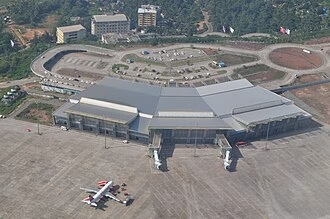
📍 Strategic Importance of Airport Road
Airport Road connects Mangalore city to:
- Mangalore International Airport
- Peripheral residential zones
- Expanding infrastructure corridors
- Industrial & commercial spillover
Infrastructure-driven localities typically benefit from:
- Improved connectivity
- Commercial expansion
- Gradual residential migration
As airport-linked areas mature, land values often appreciate steadily over time.
✈ Airport Connectivity – A Long-Term Growth Driver
Proximity to Mangalore International Airport enhances:
- NRI connectivity
- Business travel convenience
- Logistics and trade linkages
- Perception of premium accessibility
While immediate airport adjacency does not automatically guarantee price spikes, long-term urban planning tends to support such corridors.
Airport Road is positioned to benefit from this gradual expansion.
💰 Property Prices on Airport Road (2026 Update)
Average Price Per Sq Ft
₹3,500 – ₹4,500
Premium developments may reach ₹5,000 depending on amenities and layout.
📊 Ticket Size Overview
| Configuration | Price Range |
|---|---|
| 1 BHK | ₹40 Lakhs – ₹60 Lakhs |
| 2 BHK | ₹60 Lakhs – ₹90 Lakhs |
| 3 BHK | ₹90 Lakhs – ₹1.3 Cr |
Compared to central Mangalore zones, Airport Road offers one of the lowest entry price points.
This makes it attractive for:
- First-time buyers
- Long-term investors
- Budget-focused families
📈 Appreciation Potential
Airport Road is primarily an appreciation-driven micro-market.
Unlike Surathkal (rental-focused) or Balmatta (stability-focused), Airport Road’s growth depends on:
- Infrastructure execution
- Urban sprawl
- Residential expansion
- Commercial spillover
Projected 2026–2031 appreciation:
5–8% annually (if infrastructure growth remains consistent).
This positions Airport Road as a moderate-risk, higher-upside corridor.
🏢 Rental Market Analysis
The rental ecosystem here is still developing.
Tenant profile includes:
- Airport employees
- Logistics professionals
- Budget-conscious families
- Entry-level workforce
📊 Monthly Rental Range
| Configuration | Monthly Rent |
|---|---|
| 1 BHK | ₹7,000 – ₹10,000 |
| 2 BHK | ₹10,000 – ₹16,000 |
| 3 BHK | ₹16,000 – ₹25,000 |
Rental Yield
2.8% – 3.5%
Rental demand is moderate compared to Surathkal or central zones.
Airport Road is better suited for capital appreciation than rental income.
🏗 Infrastructure & Urban Expansion Drivers
Key growth catalysts include:
✔ Airport expansion & modernization
✔ Road connectivity upgrades
✔ Residential project launches
✔ Commercial corridor spillover
✔ Increased NRI movement
Infrastructure corridors typically mature over a 5–10 year cycle.
Airport Road appears to be in early-to-mid development phase.
🏘 Property Types in Demand
Most popular housing categories include:
- Affordable 2 BHK apartments
- Budget 3 BHK units
- Small gated communities
- Entry-level housing projects
Luxury demand remains limited.
🧠 Ideal Buyer & Investor Profile
✔ Growth-Oriented Investors
Willing to hold 5–8 years.
✔ First-Time Buyers
Looking for affordable ownership.
✔ Long-Term Land Investors
Seeking corridor appreciation.
✔ NRIs
Seeking property near airport connectivity.
Airport Road is not ideal for short-term speculative flips.
⚖ Pros & Cons of Investing in Airport Road
✅ Pros
- Lower entry pricing
- Infrastructure-led growth potential
- Future appreciation upside
- Expanding residential supply
- NRI connectivity advantage
⚠ Cons
- Moderate rental demand
- Infrastructure-dependent growth
- Supply risk if development accelerates too fast
Airport Road trades rental stability for growth potential.
📊 Airport Road vs Nanthoor vs Derebail
| Factor | Airport Road | Nanthoor | Derebail |
|---|---|---|---|
| Entry Price | Lowest | Moderate | Lower |
| Appreciation | Higher Potential | Higher | Moderate |
| Rental Strength | Moderate | Growing | Moderate |
| Risk Level | Moderate | Moderate | Low |
Airport Road offers corridor growth play.
🔮 5-Year Investment Outlook (2026–2031)
Expected trends:
- Gradual price appreciation
- Strengthening connectivity
- Increased housing demand
- More structured residential projects
If infrastructure execution remains steady, Airport Road could evolve into one of Mangalore’s important residential corridors.
💡 Investment Strategies
Strategy 1: Early-Phase Entry
Buy during project launch to capture growth.
Strategy 2: Long-Term Holding
Hold for 7–10 years for infrastructure maturity.
Strategy 3: Budget Portfolio Diversification
Combine Airport Road with rental-heavy areas like Surathkal.
📌 Risk Assessment
Primary risks include:
- Slower-than-expected infrastructure growth
- Oversupply in affordable segment
- Limited premium branding
However, lower entry pricing reduces downside risk.
🏁 Final Verdict – Airport Road
Airport Road represents Mangalore’s infrastructure-driven emerging growth corridor.
It offers:
- Affordable entry
- Medium-term appreciation potential
- NRI connectivity advantage
- Expansion upside
For investors willing to wait through development cycles, Airport Road real estate in 2026 presents one of Mangalore’s strongest long-term growth plays.