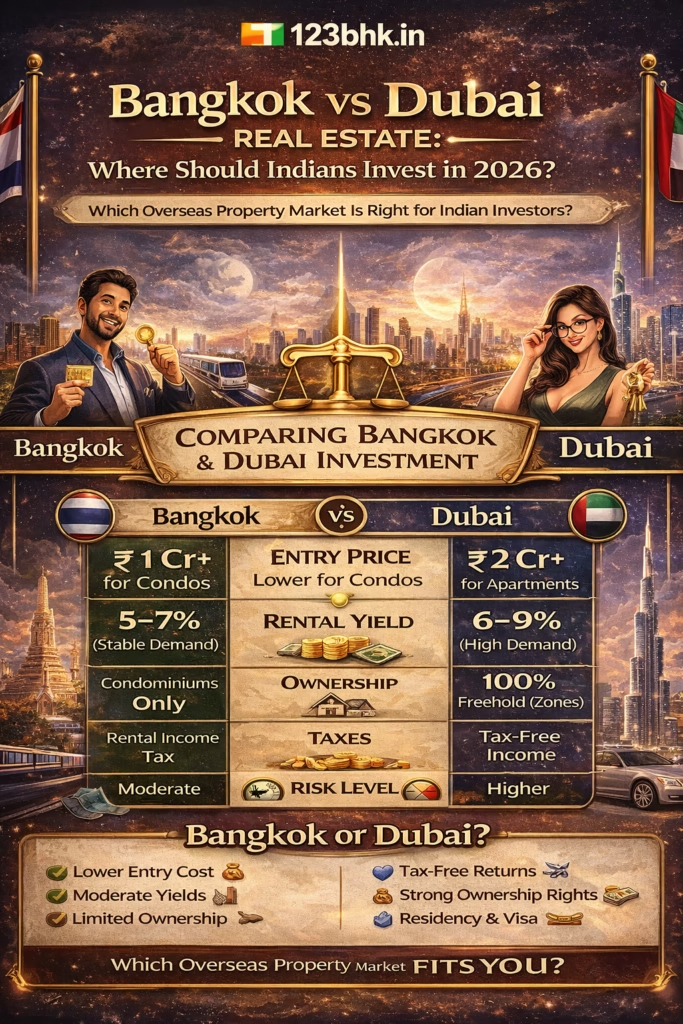
Bangkok vs Dubai Real Estate: Where Should Indians Invest in 2026?
Indian investors are increasingly exploring global real estate markets. While Dubai has been a long-time favorite, Bangkok is emerging as a new alternative offering lower entry prices and strong rental yields.
If you’re considering overseas property investment, this detailed comparison will help you decide which market suits your financial goals.
1️⃣ Entry Cost Comparison
🇹🇭 Bangkok
- Entry-level condo investment: ₹1–2 crore equivalent
- Mid-premium central locations: ₹2–4 crore
- Generally lower ticket size compared to Dubai
🇦🇪 Dubai
- Entry-level apartments: ₹2–3.5 crore equivalent
- Prime areas: ₹4 crore+
- Higher upfront capital required
🔎 Verdict:
Bangkok is more affordable for first-time international investors.
2️⃣ Rental Yield Comparison
Bangkok
- Gross rental yields: 5–7% (prime locations)
- Strong tourism & expat rental market
- Stable long-term rental demand
Dubai
- Gross rental yields: 6–9% (location dependent)
- Higher short-term rental potential
- Strong investor-focused market
🔎 Verdict:
Dubai may offer slightly higher yield potential, but Bangkok provides stable and consistent returns.
3️⃣ Ownership Rules for Indians
Bangkok
✔ Foreigners can own condominiums (up to 49% of building quota)
❌ Land ownership generally restricted
✔ Leasehold options available
Dubai
✔ 100% freehold ownership in designated zones
✔ No restriction on foreigners
✔ Easier legal clarity for investors
🔎 Verdict:
Dubai offers simpler and stronger ownership rights.
4️⃣ Visa & Residency Benefits
Bangkok
- Long-term residency visa options exist
- Investment thresholds may apply
- No automatic residency with small condo purchase
Dubai
- Property investment above specific thresholds can qualify for residency visas
- Golden Visa options for higher investment levels
🔎 Verdict:
Dubai provides clearer residency-linked investment benefits.
5️⃣ Taxation & Financial Considerations
Bangkok
- Rental income taxable
- Transfer fees applicable
- Currency exchange risk (INR–THB)
Dubai
✔ No personal income tax
✔ No capital gains tax
✔ No annual property tax
- Service charges applicable
🔎 Verdict:
Dubai has a more tax-friendly structure.
6️⃣ Market Stability & Growth
Bangkok
- Mature tourism economy
- Infrastructure expansion
- Slower but steady appreciation
- Less speculative volatility
Dubai
- Rapid growth cycles
- Strong global investor participation
- More sensitive to global economic trends
🔎 Verdict:
Bangkok = steady and conservative
Dubai = higher growth, higher volatility
📊 Side-by-Side Comparison Table
| Factor | Bangkok | Dubai |
|---|---|---|
| Entry Price | Lower | Higher |
| Rental Yield | 5–7% | 6–9% |
| Ownership | Condo only | Freehold |
| Visa Benefit | Limited | Strong |
| Tax | Rental tax applicable | Tax-free |
| Risk Level | Moderate | Moderate-High |
| Currency Risk | Yes | Lower (AED pegged to USD) |
💡 Who Should Choose Bangkok?
✔ Investors seeking lower entry cost
✔ Conservative rental income strategy
✔ Portfolio diversification in Southeast Asia
✔ Long-term holding approach
💡 Who Should Choose Dubai?
✔ Investors seeking tax-free returns
✔ Buyers wanting residency benefits
✔ Higher yield appetite
✔ Comfortable with larger ticket size
📈 Final Verdict: Bangkok or Dubai?