
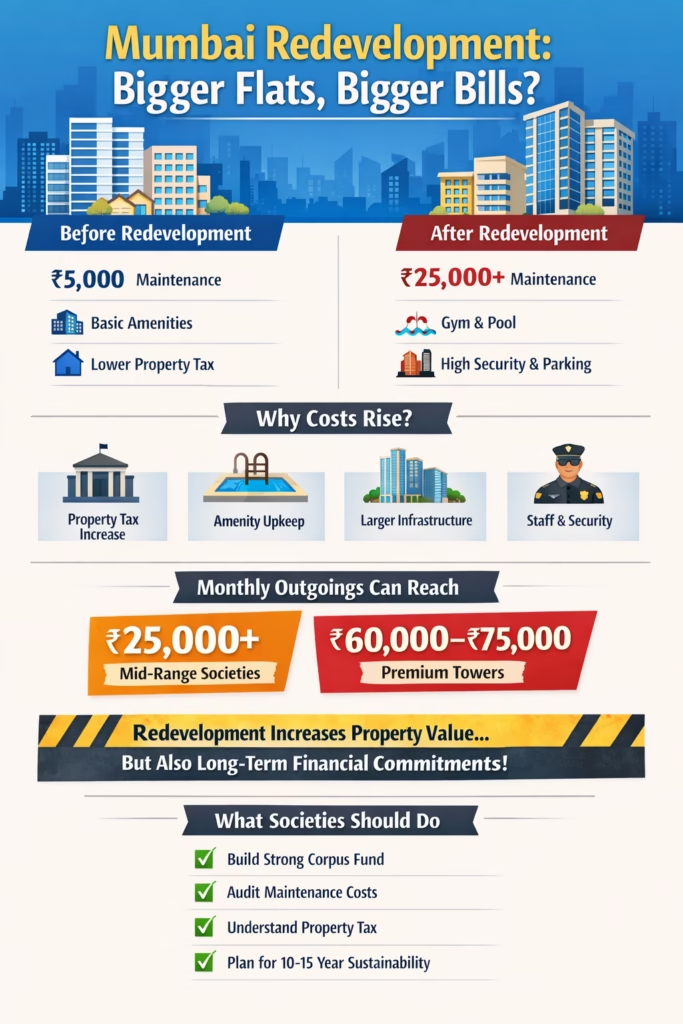
Mumbai’s redevelopment boom has transformed the city skyline, promising residents larger flats, modern amenities, and improved infrastructure. However, the transition from old societies to gleaming towers is not always financially comfortable. Many homeowners are now grappling with significantly higher monthly outgoings after redevelopment, raising important questions about long-term affordability and sustainability.
The Promise of Redevelopment: Larger Flats & Modern Living
Redevelopment projects often entice housing societies with appealing offers—spacious homes, better layouts, and facilities such as gyms, swimming pools, and community halls. These upgrades promise a lifestyle leap from ageing, low-maintenance buildings to premium residential towers.
Yet, once residents move into their newly constructed apartments, the real cost of modern living becomes evident. Increased maintenance expenses and revised property taxes often create a financial burden, especially for middle-class families.
The Shock of Rising Maintenance Charges
One of the most significant post-redevelopment challenges is the surge in monthly maintenance costs. In several redeveloped societies across Mumbai suburbs, maintenance charges have reportedly multiplied by three to six times compared to older buildings.
For instance, residents who earlier paid modest monthly dues in older structures now face much higher outgoings due to the operational costs of maintaining advanced amenities, modern infrastructure, and larger built-up areas. Premium redeveloped towers in prime locations can command steep monthly maintenance due to the scale of facilities and services required.
These increased costs reflect the true expenses associated with running high-end residential complexes—security systems, elevators, landscaped areas, and clubhouse amenities all contribute to higher recurring expenditures.
Property Taxes Add to the Financial Burden
Another key factor contributing to the rising outgoings is the reassessment of property taxes. Redeveloped buildings are evaluated based on current market values rather than older rateable value systems, resulting in significantly higher tax liabilities for residents.
While smaller apartments under certain size thresholds may receive exemptions, a large portion of the middle-class population bears the increased financial load after redevelopment.
Lifestyle Upgrade vs Affordability Concerns
Redevelopment undoubtedly improves living conditions, offering safer structures and modern conveniences. However, for many families—especially retirees and fixed-income households—the sharp increase in monthly expenses can be difficult to manage.
Experts highlight that while redevelopment enhances asset value and lifestyle, the lack of parallel income growth makes it challenging for some residents to sustain the upgraded cost of living. This has led to mixed sentiments among homeowners who expected redevelopment to be entirely beneficial.
The Importance of Financial Planning in Redevelopment
Industry professionals often recommend that housing societies negotiate and maintain a dedicated corpus fund during redevelopment agreements. Such funds, if invested wisely, can generate returns that help subsidize maintenance costs and reduce long-term financial strain on residents.
However, disagreements among society members and poor financial planning often result in missed opportunities to create sustainable funding buffers for future expenses.
Striking a Balance: Modernization with Sustainability
Mumbai’s redevelopment wave is reshaping neighbourhoods and improving infrastructure quality, but the financial implications cannot be overlooked. For redevelopment to truly benefit residents, projects must balance luxury upgrades with long-term affordability.
Clear financial planning, realistic cost assessments, and transparent communication between developers and residents are essential to ensure that redevelopment delivers not only modern homes but also financially sustainable living.
Conclusion
Redevelopment in Mumbai represents progress—stronger buildings, modern amenities, and enhanced lifestyle standards. Yet, the experience of many residents shows that shiny new flats often come with steep recurring costs.
As redevelopment continues across the city, societies and homeowners must carefully evaluate long-term financial commitments alongside the benefits of upgraded living spaces. Sustainable planning and awareness will be key to ensuring that redevelopment remains a boon rather than a burden for Mumbai’s residents.
Source & Credit: Adapted and rewritten from reporting by The Times of India on redevelopment-related cost challenges faced by Mumbai residents.